



Selling a home involves more than simply listing a property and waiting for offers. A Professional Selling Advice Guide helps homeowners understand the essential steps of preparing, pricing, presenting, and negotiating a successful property sale. From setting a competitive asking price to attracting qualified buyers, every decision can influence buyer interest, transaction timelines, and final sale proceeds.
Property owners are often very emotionally attached to their property. However, buyers compare state of repair, location, price and future cost. In order to establish the worth of the home, sellers who succeed must consider the house through a used market lens.
Start getting ready prior to photos, showings or advertising. Planning early allows for ample time to make repairs, collect documentation, and discuss pricing realistically. When buyers start asking for information, it eases pressure.
An effective sale combines showmanship and honesty. It is a need for sellers to showcase real strengths and disclose every information rightly. You become confident and prevent unnecessary disputes while performing the transaction.
Getting Your Property Ready without Spending a Ton
Preparation should focus on changes that enhance buyer confidence. When a building is intact but visibility of the interior through the windows is impaired, this may be a sign of a larger maintenance problem. Keeping the house tidy, brightening it up, fixing minor faults and keeping the rooms in order will change the impression.
Sellers must be given a detailed walk-through. Repair any leakage for the fixtures, repair damaged surfaces, re-attach loosen handles, replace broken lights and finish the unfinished project. Throughout viewings and visits, minor issues can sometimes get too much focus.
Be careful during renovation process. The higher sales price does not always make up for the cost of expensive work. Improvements should be guided by local buyers' expectations and competing properties.
|
Preparation Choice |
Seller Expense |
Buyer Impact |
Recommended Approach |
|
Deep Cleaning |
Relatively low |
Creates a strong first impression |
Complete before property photography |
|
Minor Repairs |
Low to moderate |
Reduces visible concerns |
Prioritize unfinished defects |
|
Neutral Presentation |
Moderate |
Helps buyers imagine ownership |
Simplify highly personal spaces |
|
Major Renovation |
Potentially high |
Depends on local market demand |
Evaluate likely return on investment before proceeding |
When houses are decluttered, buyers can better comprehend the space and storage. You don’t need to remove all items. The objective is to have a simple and comfortable dwelling where important elements are visible.
A property can be judged by the buyer before entering it. Maintained should be entrances, walkways, landscaping, house numbers and outside lighting. Weather may affect what is most important.
This should be discussed in prep:
- Concerns regarding safety and visible defects that could undermine buyer confidence.
- We will only require cleaner and bright arrangements at your space on the shoot day.
- Documents about enhancements, assurances, mechanisms and ongoing expenses.
- Use a safe place for medicine, precious items and paperwork.
These steps will prepare you without costing a penny. They also make later screenings easier to manage.
Market Intelligence helps you Capture Costs and Markets
From the first moment, price impacts how buyers see a property. A price above the market expectations could lead to less showings and longer selling periods. People invest in the quality, and if the price doesn’t prove the quality it lowers it.
Finding a Fair Selling Price
Useful context occurs when comparable sales are of similar location, condition, and size and property type. While the inventory of active listings does indicate the state of current competition, it does not necessarily prove what buyers are prepared to pay. Expired listings could demonstrate where previous hopes went awry.
Market pricing determines the impact of pricing. Inventory levels can influence the urgency of the buyers against the sellers. Recent local events are more important than the big national stories.
Sellers should not mistake their cost with market value. The cost of renovations and emotional value is not important to buyers. Prices should reflect the visible choices made by the audience.
Setting a suitable asking price will garner more early interest. When several buyers consider the price a fair one, it may aid in negotiation strength.
Meet Property 5 Home Buyers
Property marketing should convey more than room numbers. The right plans, status updates, upgrades, location benefits and ownership matters are what buyers need. Well-written communication helps weed out undesired buyers before wasting the seller and buyer's time.
A house should be portrayed truthfully, while being portrayed in the most favorable light. Don't misuse angles and over edit, they can come to bite on viewings. When marketing and reality are aligned, trust is safeguarded.
Targets for showings should be flexible but not unreasonable. Advance notice, access arrangements, pet permissions and privacy/security arrangements should be clear. Visitor comments can reveal presentation issues which we can fix.
The plan for marketing all real estate undergoes 4 stages:
- Identify prospective customers and the most significant features in their choice.
- Get ready for accurate descriptions, photos, documents and showing process.
- Property exposure with coordination and quest handling.
- Demonstrating review activity and buyer feedback before changing strategy.
Assess marketing results thoroughly Low inquiries can signal price or presentation problems 15 words if you have a strong interest but no offers that may signal a concern raised at the viewings.
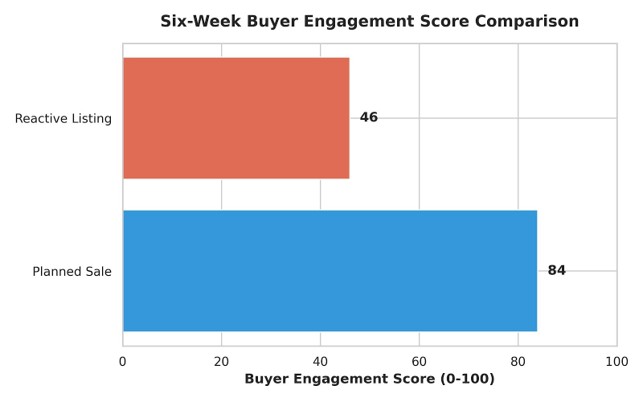
- The Planned Sale received an engagement score of 84/100 which is almost double that of the Reactive Listing score of 46/100.
- When homeowners undertake organized preparation such as fixing visual defects, checking comparable sales, as well as reviewing documents for the property, they receive significantly higher qualified buyer activity.
- The engagement score is made up of good quality enquiries, completed showings and serious buyer follow-up. Being pre-market proves buyers are serious.
Evaluating Offers Greater than the Price Proposed
The best proposal is not the one with the highest price. The reliability of a buyer depends on the kind of financing, deposit, contingencies, closing date and other items requested by the buyer as well as the buyer’s flexibility. The complete proposal needs review by sellers.
A financed offer is subject to an appraisal and final approval from the lender. While a cash offer may lessen some financing risk, it is still subject to inspections or other conditions. Each offer must be assessed separately.
Sellers should give estimates of potential net proceeds before acceptance. Transaction fees, agreed-upon repairs, tax credits, loan balances, and moving costs can reduce the headline figure. If you have a clear estimate, it enables fair comparisons.
Keep the negotiation focused. Buyer requests repairs can lead to upsetting discussions? Sellers must emphasize significant financial issues rather than trivial ones.
Effective management of deadlines becomes crucial once a proposal is accepted. You may have to act quickly on disclosures, inspections, appraisals, and more. Message received quicker.
Sellers need to prepare for inspection outcomes. Some concerns are reasonable, others are buyer subjective preference. You could opt for repairs, credits, price adjustment, or decline the request.
Final thoughts a Sale with Confidence and Authority
Before the first showing, a sale is successful. A presentation that is thoughtful is superior to one that is based on evidence-informed pricing. Accurate information then gives confidence to buyers to evaluate the opportunity.
Compare the price, terms, risks and expected proceeds of the offers. An alluring number could consist of phrases that compel weaken assurance. It protects the seller against unforeseen circumstances.
The Professional Selling Advice Guide stresses the importance of organization during the accepted-offer period. This relates to documenting and sending tasks, repairs and professionally businesslike. Transaction disruptions can occur due to missing details.
Sellers must prepare for the close as a discipline. It is important to verify the final figures, condition and transfer of the property, as well as any outstanding obligations. Clear expectations better minimize last-minute conflict.
Every property and real estate market has unique characteristics that influence selling decisions. William Reynoso emphasizes the importance of helping sellers understand market conditions, property values, and buyer expectations through reliable information rather than pressure.