



Selling a home can produce substantial proceeds, but the sale price does not equal the seller’s final amount. Mortgage balances, preparation expenses, professional fees, taxes, and negotiated credits may reduce the money received at closing.
Property Sale Financial Planning helps homeowners estimate these deductions before accepting an offer. It connects pricing expectations with actual obligations and personal goals. This preparation can reduce financial surprises during negotiation and closing.
Every transaction has different costs. Property condition, location, contract terms, financing arrangements, and legal requirements can change the final calculation. Sellers should therefore build a personalized estimate instead of relying on a general percentage.
Early planning also supports better decisions about repairs, marketing, and offer terms. A slightly higher offer may produce lower proceeds when it contains large concessions. Understanding the complete financial picture helps sellers compare offers more accurately. It also provides clearer information for purchasing another home, repaying debt, or funding future plans.
Understanding Where Sale Proceeds Go
The first major deduction is usually the remaining mortgage payoff. This amount may differ from the balance shown on a recent statement. Interest, fees, and timing can affect the official payoff figure. Sellers should request current information directly from their loan provider.
Transaction expenses may include professional compensation, legal services, settlement charges, title-related costs, and recording fees. Responsibility for these costs varies by location and contract. Sellers should ask for a written estimate based on their expected transaction. General online calculators may not reflect local practices.
Property preparation can create expenses before an offer arrives. Cleaning, painting, landscaping, repairs, storage, and staging may improve presentation. However, every improvement should have a clear purpose. Expensive renovations do not automatically produce an equal increase in sale value.
Negotiations may introduce additional deductions. Buyers can request repair credits, closing assistance, home warranties, or price reductions. These concessions affect net proceeds differently. Sellers should calculate their combined effect before agreeing.
|
Cost Category |
When It May Occur |
Possible Effect |
Planning Action |
|
Mortgage payoff |
At closing |
Reduces available proceeds |
Request an official estimate |
|
Property preparation |
Before listing |
Requires upfront spending |
Prioritize necessary work |
|
Professional services |
During the transaction |
Adds selling expenses |
Obtain written fee details |
|
Buyer concessions |
During negotiation |
Reduces net proceeds |
Compare complete offer terms |
|
Taxes and assessments |
Before or at closing |
Creates additional obligations |
Seek current professional guidance |
|
Moving expenses |
Before or after closing |
Affects available cash |
Include within the sale budget |
Building a Reliable Net-Proceeds Estimate
A useful estimate begins with a realistic sale-price range. Sellers may review current market information with a qualified real estate professional. Listing prices alone can be misleading because they do not show final terms. Comparable completed transactions may provide better context.
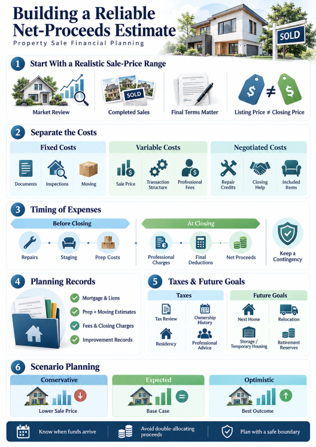
Separate Fixed, Variable, and Negotiated Costs
Fixed costs generally remain similar regardless of the final sale price. Examples may include certain document charges, inspections, or moving services. Variable costs can change with the selling price or transaction structure. Separating these categories improves scenario planning.
Negotiated costs remain uncertain until an offer is accepted. These may include repair credits, closing assistance, or included personal property. Sellers should reserve room for negotiation rather than spending every expected dollar in advance. A contingency can protect against last-minute changes.
The timing of expenses also matters. Repairs and staging may require payment before closing. Professional costs may be deducted from the final proceeds. Sellers need enough available cash to manage early obligations without depending on funds that have not arrived.
Important planning records include:
- Current mortgage and lien information
- Written estimates for preparation and moving
- Proposed professional fees and closing charges
- Documentation of significant improvements and ownership costs
Consider Taxes and Future Financial Goals
Tax consequences depend on individual circumstances, ownership history, residency, and applicable law. Sellers should not assume that every gain receives identical treatment. A qualified tax professional can explain current obligations. Personalized advice becomes especially important for investment properties or unusual ownership arrangements.
The next financial goal should influence the sale plan. A seller purchasing another home may need funds for a deposit and closing expenses. Someone relocating may face temporary housing or storage costs. Retiring owners may prioritize dependable cash reserves.
Property Sale Financial Planning should therefore extend beyond the closing statement. The seller needs to understand when funds become available and how much remains after immediate commitments. This prevents the expected proceeds from being assigned to several purposes simultaneously.
Scenario planning can make uncertainty more manageable. Sellers can prepare conservative, expected, and optimistic estimates. Each scenario should use different sale prices, preparation costs, and negotiation allowances. The conservative estimate provides a useful boundary for major future commitments.
Comparing Net Proceeds Instead of Offer Prices
Offer price attracts attention because it appears to provide a simple comparison. However, two offers with the same price can produce different financial outcomes. Financing terms, concessions, repair requests, and closing schedules may affect the seller’s final position.
Consider one offer with a higher price and substantial closing assistance. Another offer may have a lower price but fewer requested credits. The second could produce similar or better net proceeds. Sellers need a consistent method for comparing the complete terms.
Timing can also carry financial value. A delayed closing may create additional mortgage payments, taxes, utilities, or temporary housing costs. A very fast closing may require expensive moving arrangements. The best timeline depends on the seller’s circumstances.
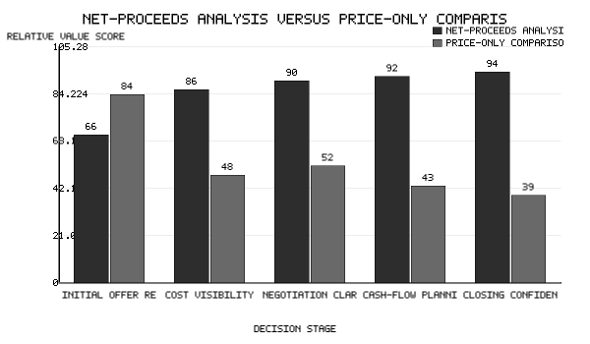
- Initial Offer Review: Price-Only Comparison leads at the start with a score of 84, compared to 66 for Net-Proceeds Analysis.
- Cost Visibility: Net-Proceeds Analysis overtakes with a score of 86, while Price-Only Comparison drops to 48.
- Negotiation Clarity: Net-Proceeds Analysis increases to 90, whereas Price-Only Comparison rises slightly to 52.
Creating a Practical Seller Budget
Begin planning before the property reaches the market. Request preliminary cost information from relevant professionals. Estimate preparation work and identify expenses requiring immediate payment. Early visibility creates time to adjust the strategy.
Next, establish a minimum acceptable net amount. This figure should reflect mortgage repayment, transaction expenses, moving costs, and future goals. It can guide pricing and negotiation discussions. However, the minimum must rely on realistic market conditions.
A practical financial process includes:
- Estimate the likely sale-price range using current professional guidance.
- Subtract mortgage, liens, transaction expenses, and planned preparation costs.
- Model concessions, repairs, delays, and moving expenses.
- Update the estimate whenever contract terms or costs change.
Sellers should keep receipts, estimates, contracts, and improvement records organized. These documents can support tax discussions and transaction reviews. Digital copies provide useful protection when paper records become unavailable.
Avoid making irreversible purchases with estimated proceeds before closing. Transactions can be delayed or cancelled. Maintaining flexibility protects the seller from commitments based on uncertain funds. A contingency reserve can also absorb unexpected expenses.
Professional roles should remain clear. Real estate professionals can discuss marketing and transaction structure. Settlement providers can explain anticipated closing charges. Tax advisers and attorneys should address matters within their respective expertise.
Protecting Proceeds Through Careful Preparation
Property Sale Financial Planning gives sellers a clearer view of the money behind a home transaction. It replaces assumptions with documented estimates and scenario comparisons. This perspective supports more informed pricing, negotiation, and moving decisions.
A strong plan includes mortgage obligations, preparation expenses, professional charges, concessions, taxes, and relocation costs. Sellers should also connect expected proceeds with their next financial objective. This prevents overestimating the cash available after closing.
Costs and legal obligations vary across transactions and locations. Therefore, sellers should obtain current guidance from qualified professionals. General estimates provide structure but cannot replace personalized financial, legal, or tax advice.
The strongest sale decision considers both price and final proceeds. William Reynoso emphasizes the importance of regularly updated calculations to help sellers respond when offers or expenses change. With careful preparation and professional guidance, homeowners can approach closing with greater clarity and protect the value created through their property ownership.