



Understanding How Realtors Help Home Sellers can make the selling process feel more organized and manageable. Realtors can assist with pricing, property preparation, marketing, negotiations, disclosures, inspections, and closing details throughout the transaction.
Sellers can manage multiple tasks independently. Nonetheless, each choice can impact buyer activity, deal risk, and the subsequent monetary outcome. If there’s a mistake with the pricing or paperwork, the sale may also be delayed.
Effective real estate agents will know the area and guide you through the process. Through market condition evaluation, property preparation, buyer attraction, and offer comparison, the agent aids the seller.
Having a professional advocate does not exclude all challenges. The outcome is still influenced by market demand, property condition, financing, and buyer behavior. Yet, with experienced support, sellers can engage more confidently and experience fewer avoidable surprises.
Formulating the Right Price and Sales Strategy
Among the most key decisions in a home sale is pricing. An overpriced home might not get enough action and an underpriced one might leave money on the table.
Typically, a Realtor will initiate with a CMA. This review considers sold properties, active listings, pending sales, location, condition, size, and property features.
Recent transactions reveal buyers' purchase prices. The market value of something does not get established by active listings. Pending transactions might indicate demand changes, additional signs.
|
Selling Task |
Realtor’s Role |
Seller Benefit |
|---|---|---|
|
Market Analysis |
Reviews comparable properties and local trends |
Supports a realistic listing price |
|
Property Preparation |
Recommends repairs, cleaning, and staging |
Improves presentation before marketing |
|
Listing Strategy |
Plans timing, photography, and exposure |
Creates a stronger market launch |
|
Offer Review |
Explains price, terms, and contingencies |
Helps compare complete offer value |
|
Closing Coordination |
Tracks documents, deadlines, and parties |
Reduces preventable transaction delays |
Selling timeline can also be considered in pricing. An owner with more flexible scheduling may take a different approach than someone moving quickly.
The agent can explain how price ranges impact online property searches. A small change in pricing might place the property in extra buyer filters. Still, the price must reflect current market evidence.
It’s up to the seller to set the final selling price. An analyst provides an analysis and recommendations, while the owner makes the choice that fits their priorities.
Marketing the Property
Many buyers will start their interest with pictures and listing information. Thus, preparation must be done prior to the launch of the property.
Enhancing the Presentation Prior to Listing
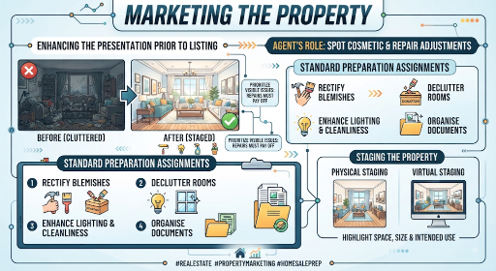
A real estate agent can spot cosmetic and repair adjustments that may affect buyer views. We’ll suggest decluttering and deep-cleaning, painting, lighting, landscaping and furniture changes.
Not all repairs are created equal. Expensive renovations done shortly before the sale may not pay for themselves. An agent can help to prioritize visible issues and buyer concerns.
Standard Preparation Assignments Include:
- Rectifying visible blemishes and harmed coatings.
- Cut down on stuff in rooms and storage.
- Enhancing lighting, cleanliness and external presentation.
- Organizing important land and building documents.
Staging can make spaces more comprehensible. Where you place furniture can highlight the size, beauty, and movement of the room and your intended use. You can employ physical and virtual staging to vacant properties.
Developing Robust Listing Visibility
Marketing allows homes to be accurately listed so that they can be sold for optimum price. For certain properties, videos and floor plans or virtual tours may also be beneficial.
The wording of the listing should depict what is in the home. Potential buyers should have proper information about improvements, layout, amenities, and benefits of the location.
A realtor has the ability to place the property in an MLS. The agent additionally organizes the online listing of the property together with other tasks.
Providing feedback may reveal repetition. If multiple buyers refer to condition, layout, or price, a measured response may be in order.
This work shows how Realtors Assist Home Sellers connect property preparation with buyer expectations. When presentation, pricing and access support each other, marketing works better.
Sales in q Agent-Guided and Unstructured
Think about two comparable homeowners looking to sell in the same neighborhood. The two houses are similar in size, condition and features. Their sales techniques generate different readiness levels.
The seller who is guided by an agent is given a market evaluation and a preparation plan. We will schedule professional photos after repairs and decluttering. Standards for show procedures and offer reviews are also established.
The price selection of the unstructured seller is based on his own expectations mainly. Photographs are clicked before preparation is done. There is no organized process for handling buyer inquiries or showing requests.
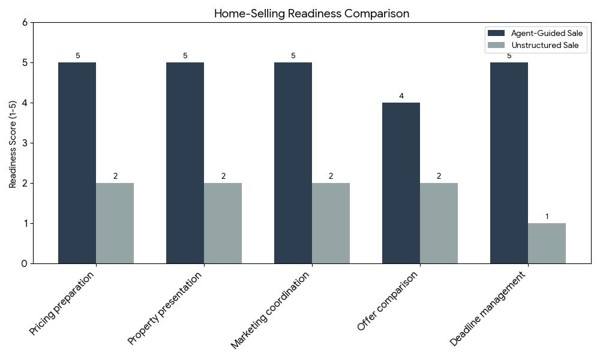
- The agent-guided approach is fully prepared for pricing, presentation, and marketing. Scores perfectly (5) in readiness and ensures consistent messaging to buyers. Feedback is considered in context and process.
- An unstructured seller may complete the sale but if your scores on pricing and presentation (2) are low there is often a price bring down, scheduling hiccups and quoting issues.
- Deadline management shows the largest disparity, with agent-guided sales active score of 5 and unstructured sales’ more limited readiness score of 1, signaling the importance of coordinating transaction management.
Managing Proposals, Inspections, and Negotiations
The strongest offer is not always the highest offer. The reliability of an offer depends on various factors like financing, contingencies, deposit amount, closing date.
A realtor can arrange these terms in a clear comparative table. The agent might also discuss with buyer representatives to clarify any incomplete or unclear conditions.
Negotiation often doesn’t stop once there is an offer. Inspections can lead to requests for repairs credits or price changes the results of the appraisal can impact financed transactions.
It contains a responsive process structured:
- Review cost, funding, conditions, and schedule.
- Review requests for anything seen on site to confirm property condition.
- Monitor contract deadlines and required responses.
- Verify the modifications agreed upon in writing.
The agent must keep explaining options but not decide for the seller. The owner could accept, reject, counter or ask for more information depending on the situation.
When negotiations become tough emotional distance can help. Sellers can become emotionally attached to their home and take offense to buyer requests. Only a professional can keep the talks to contract and financial issues.
The agent is in charge of contacting your lender, inspector, appraiser, title professional, attorney, and closing agent. You can simply rephrase this and help in catching missed deadlines well before they endanger the transaction.
Path towards a Confident Closing
The closing period requires attention even after agreement has been reached. Financing, title review, repairs, documents, and final access must be on time.
Agent can monitor repairs, appraisal, buyer funding and closing prep as previously agreed. Sellers must produce requested documents within the agreed time and maintain the property.
Typically, the buyer is able to confirm the home’s condition before closing at the final walkthrough. The items specified in the contract should be intact, and any necessary repairs should be made.
Real estate agents play a critical coordinating role for home sellers and buyers. They link business preparation, marketing, negotiations and closing into one managed process.
A clear communicator who grasps the local market is ideal for sellers. Experience with similar houses and realistic marketing aid in better decision-making.
Selling your house is a significant personal and financial move. Sellers have more clarity, better organization, and confidence at each stage, thanks to expert assistance.
William Reynoso provides sellers with a practical seller guide and a comparative market analysis based on active and recently sold local properties, helping support informed pricing and selling decisions.