



Effective home staging tips help how potential buyers will experience the property in photographs, virtual tours and private showings. It’s not necessary to conceal every trace of everyday life. It enhances every space through improved definition, comfort and intention.
Often, buyers quickly judge listings after seeing photos. Overstuffed counters, large objects, dark houses, and unresolved repairs can undermine their first impression. An organized and clean presentation helps them to focus on the property.
Staging can also clarify confusing floor plans. Furniture arrangement shows that the living, dining, work, and sleep areas can all work. This advice is especially useful in empty or oddly shaped rooms.
An effective staging plan is developed before taking professional photographs. Everything from cleaning, to repairs, to lighting, to furniture placement and the external presentation should work in harmony. When everything’s coordinated buyers have fewer distractions and stronger reasons to remember the home.
Get the property ready for decorating
When staging, start with maintenance over accessories. Buyers wouldn't be distracted by decorative pillows despite damaged trim, leaking faucets or wall marks. Minor flaws may leave guests questioning the overall state of the building.
When walking through the house, pretend that you are seeing the house for the first time. Inspect the walls, doors, flooring, fixtures and cabinets. Inexpensive repairs that enhance appearance or address obvious concerns.
So is deep cleaning. Kitchens and bathrooms deserve particular attention; buyers examine these areas closely. Windows, appliances, grout, mirrors, baseboards and light fixtures should look well kept.
|
Preparation Area |
Recommended Action |
Buyer-Focused Benefit |
|---|---|---|
|
Entryway |
Clean the door, hardware, flooring, and porch |
Creates a confident first impression |
|
Living Room |
Reduce furniture and improve conversation flow |
Makes the room appear open and usable |
|
Kitchen |
Clear counters and organize visible storage |
Highlights workspace and cabinet capacity |
|
Primary Bedroom |
Use simple bedding and balanced furniture |
Creates a calm, spacious presentation |
|
Bathrooms |
Remove personal items and refresh linens |
Suggests cleanliness and good maintenance |
Storage spaces you can't see should also be decluttered. Consumers might examine cupboards and closets for size and storage. When the storage is packed full, the property looks smaller.
Clear away objects that do not fit the room. Additional chairs, heavy exercise equipment, and unchecked furniture interfere with movement. Get rid of useless stuff, store, donate, or temporarily relocate it.
It is important that depersonalization stays balanced. It is possible to pare down family photos, collections, and precise decor without leaving the home feeling bare. The ideal place should be warm and inviting and allow the buyer to envision their future in the space.
Set-up Important Rooms with a Clear Purpose
Every space in your home should communicate its use. Customers shouldn’t have to wonder if a space is for eating, working, resting, or storage.
Focus on Key Areas
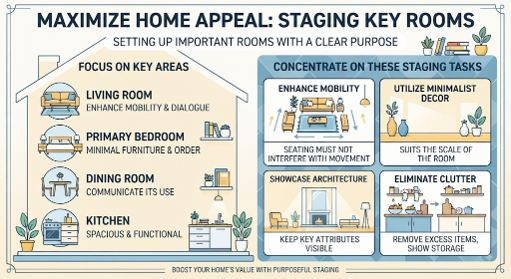
You often want to focus on the living room, primary bedroom, dining room and kitchen early on. The spaces mold the buyers' impression of how their daily life will be inside the property. They are often present in listing photos.
Concentrate on these staging tasks:
- Reorganize furnishings to enhance mobility and dialogue.
- Utilize minimalist decor that suits there scale of the room.
- Ensure that key architectural attributes remain visible.
- Eliminate items that add clutter to the space.
The room should not only feel comfy but not look too loaded. Seating must not interfere with the flow of movement in space. Don’t force everything against the walls when another arrangement creates a better balance.
Use clean bedding with limited furniture in the master bedroom. Creating a visual sense of order: matching lamps or paired bedside tables. This closet should be organized to show storage in action.
Your kitchen should feel spacious and functional. Only put out a few appealing items on counters. Get rid of fridge magnets, cleaning products, other appliances and paperwork.
Enhance Lighting and View balance
Natural light can make a room feel warmer. Before photographs and showings open curtains and blinds. Windows should be so clean that sunlight comes in without revealing any dirt or streaks.
If space is too dark, add more lamps or stronger bulbs. Put new bulbs in those that have burned off, and use consistent light temperatures within each room. Using mixed lighting can create uneven photos.
Well-placed mirrors reflect light and add depth to a space. However, too many mirrors or decorative items can be distracting to buyers. Every accessory must help with the room, not drown it.
Neutral colors often offer flexibility to different buyers. This does not mean each space must look the same. Small accents can add warmth while still appealing to the masses.
Presentation of a Scene vs. Everyday Look
Imagine two nearly identical houses coming onto the market in the same neighborhood. They provide similar space, condition, and amenities. They deliver unique experiences to buyers.
The home is cleaned, repaired and staged before photography. Furniture collective all rooms’ functional but personal things are limited. The photographer opts for a second home that shows cluttering and variances in lighting effects.
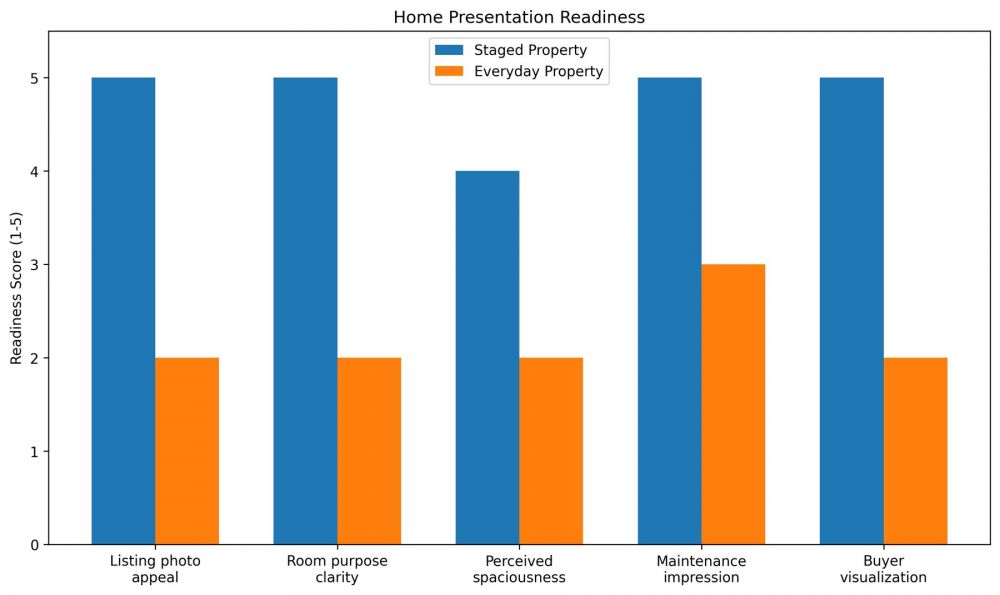
- A staged property will show a stronger presentation readiness to the prospective buyer meaning it will score 5 for listing photo appeal, room clarity, maintenance impression and ability for a buyer to visualize them.
- The visual readiness is mainly in the range of 2 and 3 in different evaluation areas.
- Making it easier for buyers to understand, staging helps visitors visualize room layouts, seating arrangements, and property potential.
- Presenting a property well can make it appear more spacious, even though it does not change size.
Prepare an Impressive Routine before Selling
A staged home always has to stay photogenic. Sellers must keep a bearable routine for unannounced showings, open houses, and agent visits.
Designate a daily reset procedure for kitchens, bathrooms, bedrooms, and living spaces. Keep counters free, make beds, and pack away personal items quickly. Having a few labeled containers makes last-minute prep easy.
Apply this four-step showing process:
- Uncover the window and switch on significant lighting.
- Discard trash, laundry, dishes, and pet supplies.
- Change the room temperature and get rid of even strong smells.
- Inspect the entrances, bathrooms, counters, and floors.
Plan your pet arrangements well in advance. Visitors can become distracted by pet items such as hair and litter. If possible, try removing or securing the animals during showing.
Do not use strong smells to mask household odors. Powerful smells can distract buyers or cause nausea. Achieving superior results requires cleaning, ventilating, and source removal.
The outside areas warrant the same consistency. Neatly arrange outdoor furniture, cut grass, remove litter, and clean paths. The front entry must stay clean while on the market.
Consult the listing expert prior to making costly alterations. Local buyer expectations differ, and some improvements create greater value than others. Understanding the market can help prioritize staging budgets.
Showcase the House as a Buyer’s Opportunity
When homes are staged successfully, buyers focus on the possibilities of the home. By keeping things simple it eliminates distractions while retaining focus on space, condition, natural light, storage and other useful features.
The process should start off with cleaning and repair work. Furniture, decor and lighting can then reinforce the strongest elements of each space. Space that is used often is more important.
You can stage a house without expensive furniture in every room. Neutral presentation, better lighting, careful editing and organized storage can make a huge difference.
Sellers should keep the staged look after the listing goes live. Preparing for online classes helps to equal the expectations.
When a home is presented with thought in mind, it is easier to process and navigate; thereby feeling more comfortable. When buyers envision themselves in the home, they may feel more confident about the property.
William Reynoso highlights the value of home staging, helping buyers better visualize a property as their future home, especially in key spaces such as the living room, primary bedroom, dining room and kitchen.