



Purchasing a house involves paying more than just its listed price. The total investment may rise due to closing costs, inspections, loan fees, repairs, and more that buyers need to plan for. Buyer Side Concessions allow a buyer to negotiate some financial obligations during a real estate transaction.
These concessions can ease the purchase of a property by buyers who have to manage many expenses at the same time. The funds may help pay for certain costs, or allow us to be more flexible with our finances, though don’t change the value of the property itself.
Being aware of how these arrangements work would help the buyers while negotiating. A well-drafted concession agreement can ensure smoother transactions between the buyer and seller and enhance the chances of completing a successful sale.
For buyers, it’s important to know when and how to request concessions that affect the final deal. With the right guidance, these incentives could prove to be beneficial in the home-buying strategy.
Buyer Side Concessions and Their Significance
Buyer Side Concessions are agreements in which costs related to the home-buying process are paid for or negotiated down. Discussions among buyers, sellers and real estate professionals often take place before a contract is finalised.
Concessions are primarily given to assist financially in purchasing a product or service. Making a home buying offer requires a lot of upfront expenses, but concessions give buyers immediate relief.
Typical costs that may be impacted are closing costs, loan charges, inspection charges and repair or improvement of property. Yet, whether or not these concessions will be available, as well as their limits, hinge on market conditions. Moreover, the lender’s guidelines, as well as contract terms, also affect availability of concessions.
Concessions should not be confused with a price reduction on the property, buyers should know this. Rather, these are usually paid out towards permitted expenses to finalize the transaction.
|
Feature |
Buyer Side Concessions |
Traditional Price Reduction |
|---|---|---|
|
Main Purpose |
Helps cover buyer expenses |
Lowers the property purchase price |
|
Impact |
Reduces upfront costs |
Reduces overall sale price |
|
Negotiation Area |
Closing costs and related fees |
Listing price |
|
Buyer Benefit |
More available cash during purchase |
Lower mortgage amount |
|
Seller Benefit |
Encourages stronger offers |
May attract more buyers |
How buyer-side concessions function in real estate
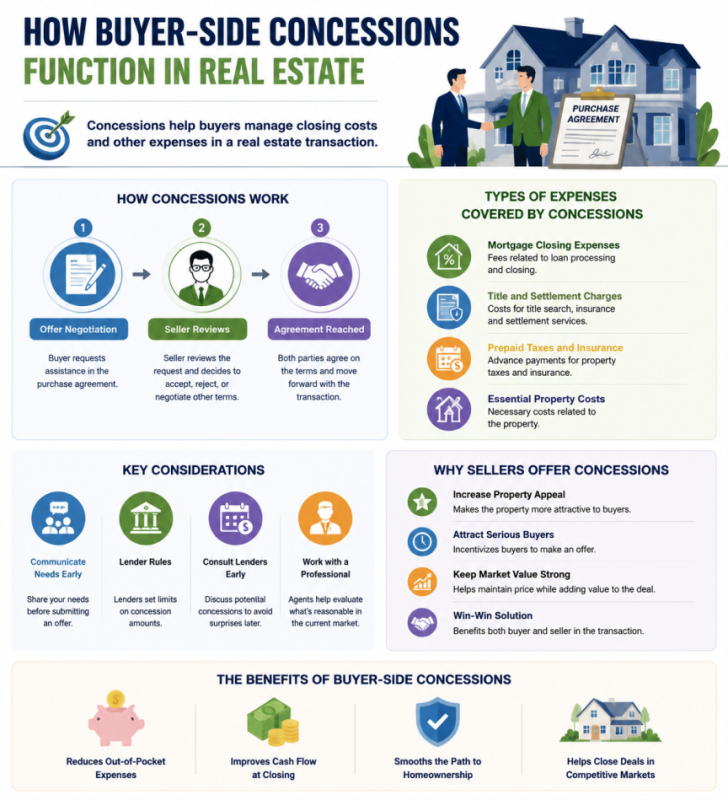
The use of concessions starts at the offer negotiations. Buyer may request for assistance in the purchase agreement. After that, the seller reviews the request and can either accept, reject, or negotiate other terms.
Different Types of Expenses Covered by Concessions
The terms and applicable law dictate the precise uses of concessions. These are typically used for expenses related to the closing process itself.
A few examples are.
- Expenses associated with the mortgage closing.
- Charges of Title and Settlement
- Payment in advance of tax and insurance.
- Essential property-related costs.
The needs of buyers should be communicated before the offer. A real estate professional can assist with evaluating whether the request is reasonable in the current market.
The lender’s regulations and the requirements of the loan program usually restrict concession values. Mortgage lenders often set caps on amounts to ensure that the transaction is viable.
Lenders Must Be Consulted Early to Discuss Potential Concessions to Buyers. This helps avoid unwanted surprises at the end of the deal.
By what means sellers agree to offer concessions?
Sellers may provide concessions to help make their property more desirable. In some situations, providing financial assistance can help incentivize buyers to make an offer.
A property that has been on the market for a long time may be given more incentives. Rather than reducing the price of the home for sale, a seller may pay buyer expenses.
This method can keep the property’s market value steady, thereby improving the deal’s overall appeal. The parties can both benefit from a solution that works.
However, all settlements ought to be carefully reviewed. Buyers must know what costs are covered and whether the contract provides real monetary value.
Transparency between all parties is essential for a successful transaction. Effective communication helps to avoid misunderstandings regarding the final terms.
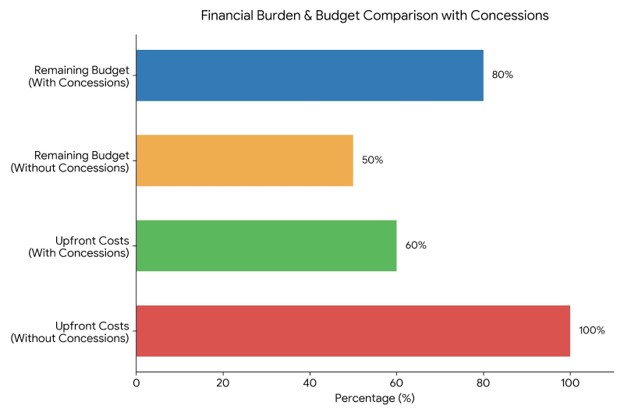
- Negotiated concessions reduce the total cash at closing from 100% to 60% in an effort to minimize the upfront burden.
- Financial flexibility increases due to available budget rise from 50% without concessions to 80% with concessions, greater room to maneuver.
- Buyers can use the extra liquidity for additional expenses after closing. For example, on small updates or repairs to the home. Or for new furniture or moving expenses.
Ways in Which Buyer Concessions Can Be Negotiated
In order to negotiate for concessions, one must be prepared and know what they want. When negotiating requests, buyers should ground conversations in realism, considering how the request fits the overall deal.
Before making an offer, buyers should examine their financial position and establish the areas where help would be most valuable. This preparation ensures that the negotiations yield meaningful benefits.
Things to keep in mind include:
- Getting to know lender approval limits.
- We study all expected buying costs.
- Evaluating financial market conditions.
- Deliberating alternatives with experts
An important aspect is also long-term effects comparison. A concession that decreases upfront costs should fit into the buyer’s overall financial plan.
Experts in the real estate domain can help in this issue. Having Sellers Agent by your side protects your rights and interests during the entire process.
Concessions are most effective when they yield a fair result for all parties. When buyers are given support then it offers sellers a better chance of selling.
Final Thoughts on Buyer-Side Concessions
Buyer Side Concessions can be an effective way to ease financial stress when purchasing a home. They offer additional flexibility to buyers by helping with certain transaction costs.
Lender agreements must be carefully planned, clearly communicated, and understood in terms of their requirements. Correct usage of them can provide adequate benefits to both buyers and sellers.
The best buyers see beyond just the price they pay and look at the whole finances. Taking available incentives, market conditions and personal goals into account help you make better decisions.
Learning about concessions helps buyers navigate negotiations with greater confidence. William Reynoso guides clients through the process, helping both first-time buyers and investors understand how these agreements can simplify the path to homeownership.